- Science news
- Featured news
- Balding seals and invasive crocs: Here are Frontiers’ photo highlights of the month
Balding seals and invasive crocs: Here are Frontiers’ photo highlights of the month
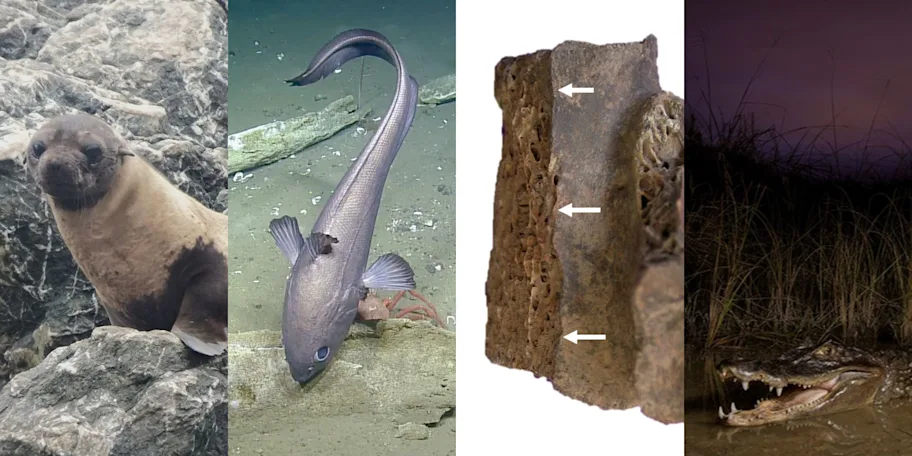
At Frontiers, we bring some of the world’s best research to a global audience. But with tens of thousands of articles published each year, it’s impossible to see all that research in the same way scientists do. Here are some images that showcase some of the newest findings published in the last month.
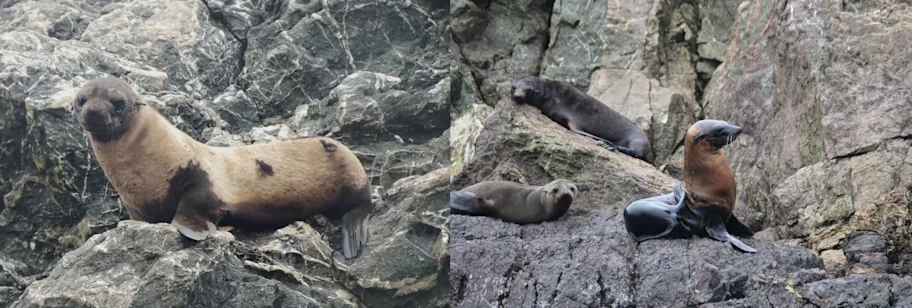
More than a quarter of Guadalupe fur seals may be losing their fur
Endangered Guadalupe fur seals (GFS) occupy a colony on the San Benito Archipelago, a group of small islands in the Pacific. During the 2024 breeding season, researchers in Mexico and Canada examined causes of neonatal GFS morbidity and mortality and assessed potential threats to species conservation associated with entanglement, alopecia syndrome, and marine pollution. They published their results in Frontiers in Marine Science. For alopecia syndrome – a condition characterized by the loss of guard hair and damage to the underfur – they found high prevalence (21% to 26%), especially among young seals. The cause of alopecia among GFS is currently unknown.
Full article: https://www.frontiersin.org/journals/marine-science/articles/10.3389/fmars.2026.1696006/full
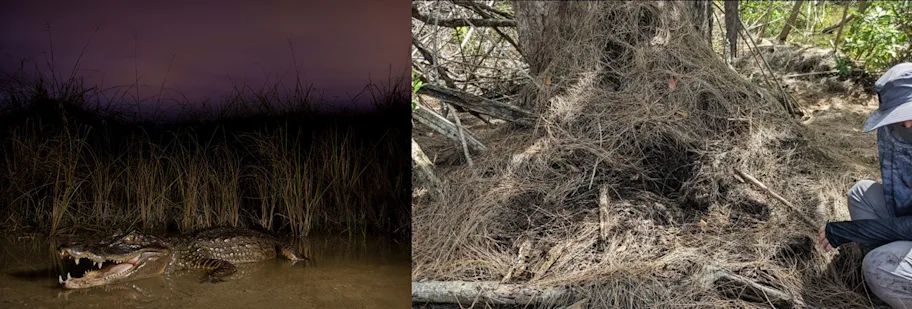
Restoring native crocodiles to Florida’s Everglades could be hindered by invasive caimans
The spectacled caiman is a non-native crocodylian that has been roaming Florida’s Everglades for more than 40 years since it was first introduced and established. In a recent Frontiers in Amphibian and Reptile Science review, researchers in the US presented insights into spectacled caiman’s habitat, seasonal dynamics, and influence in trophic interactions within native aquatic communities in South Florida. They also discussed the implications of spectacled caiman management and control in Everglades restoration projects and the potential effects on the future of this invasive species.
Full article: https://www.frontiersin.org/journals/amphibian-and-reptile-science/articles/10.3389/famrs.2026.1778412/full
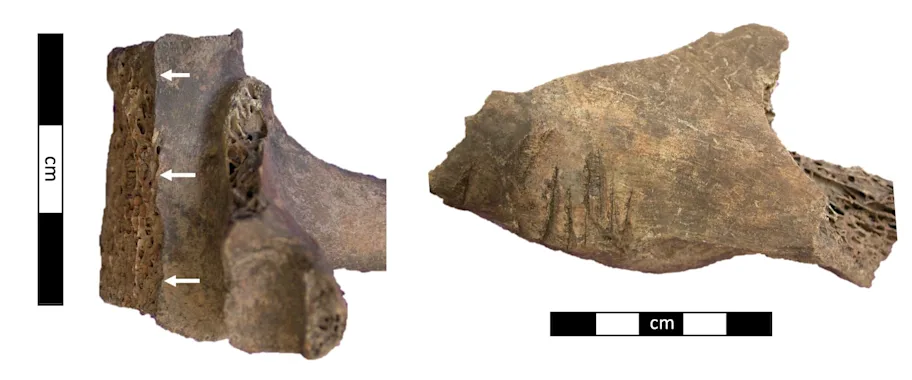
Butchering marks on ancient bones tell scientists when Bronze Age people started using more efficient metal tools
Writing in Frontiers in Environmental Archaeology, researchers in Norway and Canada recently investigated the evolution of butchering technology using newly analyzed zooarchaeological data from Bronze Age Tell Aphek, an archaeological site in north Israel. They showed that stone tools dominated during the Early Bronze Age (3000–2500 BCE) followed by a dramatic and sudden shift towards metal tools with the onset of Middle Bronze Age occupation (2000–1550 BCE). By the end of the Late Bronze Age (1550–1200 BCE), metal tools had almost completely replaced stone tools as the main butchering tools.
Full article: https://www.frontiersin.org/journals/environmental-archaeology/articles/10.3389/fearc.2026.1770900/full
Whalefalls can feed deep-sea creatures for more than 20 years
In a recent Frontiers in Marine Science article, an international team of researchers published the results of a 15-year-long observation of the skeleton of a blue or fin whale lying at roughly 1,300 meters deep at Clayoquot slope off Vancouver Island. Remotely, they recorded high-definition video during four cruises between 2012 and 2024. They found that species richness has increased from 26 taxa in 2009 to 31 in 2023. They concluded the sulphophilic stage – which starts after soft tissue has mostly been consumed and anaerobic bacteria begin breaking down the remaining lipids in the whale bones – has lasted more than 20 years, with indications that it will last for at least another decade.
The remotely operated vehicle (ROV) ‘Hercules’ performs video surveys along the whale skeleton and around the skull.
Audio: Conversations about the technicalities of the survey, including proper altitude and distance from the whale skeleton, defining the ROV video and still imagery settings, and questions from a general audience connected through live chat. ROV pilot: Dan Cormani; Video engineer: Ed McNichol, ROV Navigator: Renato Kane; Dive lead: Dirk Brussow; K-12 Education coordinator: Lauren Hudson; Lead scientist: Fabio De Leo. Connected remotely, co-author of the study and expert on video photogrammetry: Tom Kwasnitschka.
Full article: https://www.frontiersin.org/journals/marine-science/articles/10.3389/fmars.2026.1770207/full
REPUBLISHING GUIDELINES: Open access and sharing research is part of Frontiers’ mission. Unless otherwise noted, you can republish articles posted in the Frontiers news site — as long as you include a link back to the original research. Selling the articles is not allowed.


