HQ
hong quan nguyen
Vietnam National University, Ho Chi Minh City
Ho Chi Minh City, Vietnam
1,782
Total downloads
10k
Total views and downloads
This Research Topic is part of a series of article collections published within Frontiers in Water created to align with the five sub-themes of the 2nd International Sociohydrology Conference (https://ishc2025.t.u-tokyo.ac.jp/), providing an interactive space for contributors to submit their research.
The other Research Topics in the series include:
- Comparative Sociohydrology Across Places and Scales: Aiming Towards Synthesis
- Pluralizing Water Knowledge for Inclusive Water Governance: Meaning-making, Co-creation and Transdisciplinarity
- Expanding Sociohydrology: Embracing Spatial Heterogeneity and Emerging Nexuses
- Mainstreaming Sociohydrology: Towards Designing and Implementing Management Interventions
Watch the Topic Editors discuss the themes of the Research Topics and preview the conference at a recent Townhall: Expanding and Mainstreaming Sociohydrology Toward Transdisciplinary Praxis
Sociohydrological challenges require solutions that draw on diverse knowledge systems and experiences. Despite methods like Participatory Action Research (PAR) and citizen science offering ways to bridge science-community divides, conventional approaches often overlook the knowledge and experiences of historically marginalized groups in water management and research. This theme examines innovative approaches for meaningful engagement of local and Indigenous communities in water-related decision-making and research. This theme focuses on:
i) Research partnerships between scientists and communities that examine social inequities and how they affect water governance and justice
ii) Integration of sociohydrological approaches with local and Indigenous water knowledge, including legal frameworks
iii) Co-identified interventions through collaborative efforts between scientists, governing officials, community members, or others through participatory approaches
iv) Mixed methods research for a deep understanding of local value systems, participatory decision-making, and shared risk assessment
v) Emerging ethical considerations and evaluations for responsible, high-quality research
vi) Innovative research methods that address intersectional factors - including gender, race, age, income, ability, nationality, and others - in relation to water access inequities
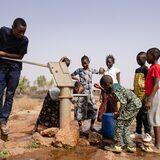
Keywords: indigenous, social inequality, water distribution, water infrastructure, governance
Important note: All contributions to this Research Topic must be within the scope of the section and journal to which they are submitted, as defined in their mission statements. Frontiers reserves the right to guide an out-of-scope manuscript to a more suitable section or journal at any stage of peer review.
